
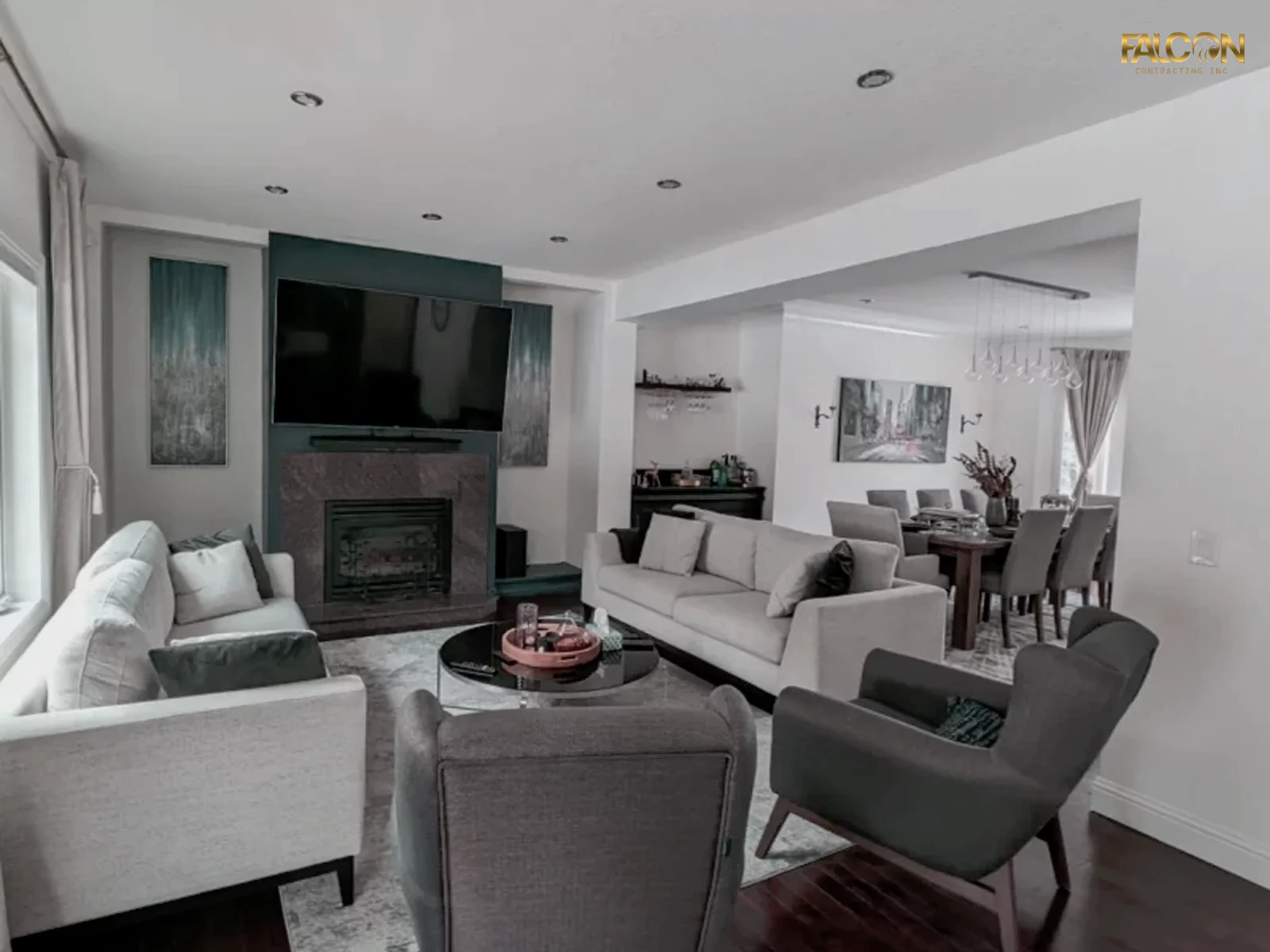
Homeowners often desire open, airy living spaces, but a solid wall standing in the middle of the main floor can easily block that vision. Taking down structural barriers requires careful planning, strict safety measures, and municipal approvals. If you are planning a major home renovation, understanding the detailed process of load-bearing wall removal in Calgary is the first critical step. We will walk you through exactly what it takes to open up your home safely, legally, and beautifully.
Expertise in Transformation
Ready to transform your living space? Our expert team at Falcon Contracting Inc. is dedicated to removing your load-bearing walls with the highest safety and engineering standards, creating the open, modern space you’ve always dreamed of.
View Our Wall Removal PortfolioIdentifying Structural Walls in Your Home
Not every wall in your house holds up the roof. Knowing the difference between a simple partition wall and a load-bearing wall is vital for your safety and your renovation budget. A load-bearing wall transfers the heavy weight of the roof and upper floors down through the house and into the concrete foundation.
You should always hire the best contractor in Calgary or structural engineer to confirm, but there are a few architectural clues you can look for during your initial planning phase.
Signs a Wall Supports Weight
- Perpendicular Joists: If the floor or ceiling joists run at a 90-degree angle to the wall, that wall is almost certainly structural.
- Basement Support Systems: A wall on the main floor sitting directly above a steel telepost, a concrete footing, or a main wooden beam in the basement is carrying weight.
- Exterior Walls: By default, the outside framework of your house is structural. Modifying exterior walls for large sliding doors or massive windows requires advanced engineering.
- Stacked Walls: If a wall on the second floor sits directly above a wall on the first floor, they are likely working together to support the overall structure.
- Roof Trusses: In homes with older “cut roofs,” interior walls often support the rafters. Modern truss roofs distribute weight differently, but central walls may still bear significant loads.
Read More: Renovation service in Calgary
Why Calgary Homeowners are Choosing Open Concepts
Many established Calgary neighborhoods feature homes built in the 1960s, 70s, and 80s. The standard architectural style during those decades favored compartmentalized layouts, separating the kitchen, dining room, and living room into distinct boxes.
Modern living standards favor connectivity. Removing structural walls allows families to cook, eat, and socialize in a single, unified area. Updating an older Calgary bungalow or bi-level by removing a central dividing wall completely modernizes the property without the need for an expensive exterior addition.
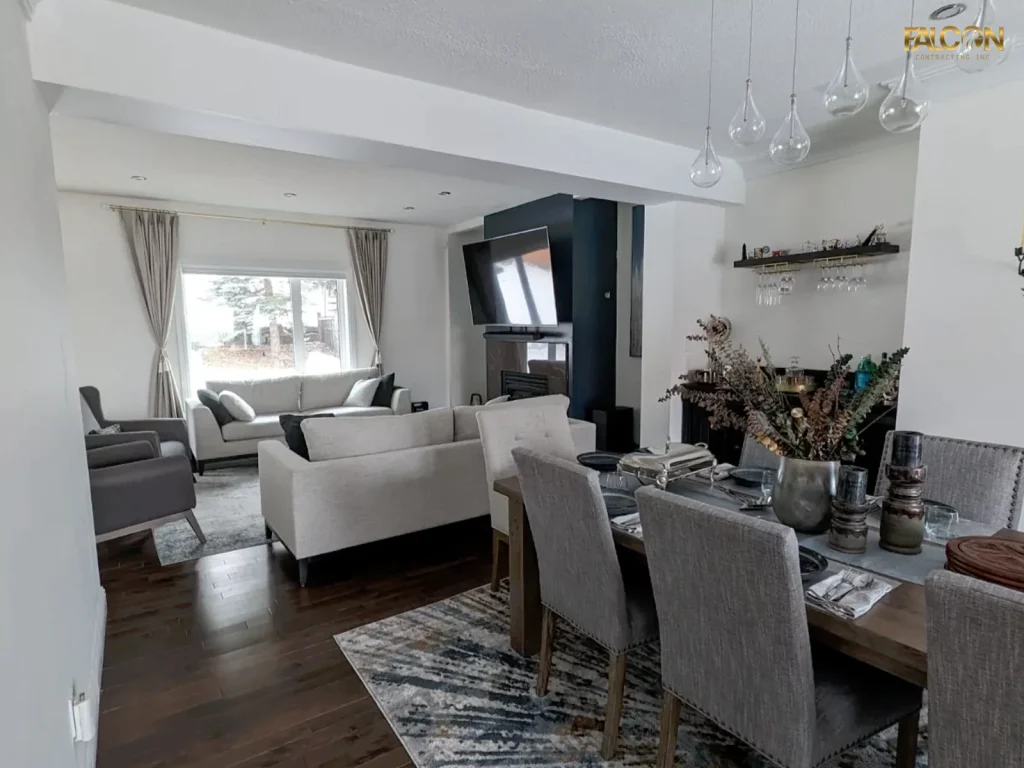
The Core Benefits of Opening Up Your Space
Removing a central wall completely changes how your home feels and functions on a daily basis. Beyond aesthetics, there are practical reasons to invest in structural alterations.
1. Maximizing Natural Light
Calgary receives more days of sunshine than almost any other major Canadian city. Older architecture often restricted that abundant sunlight to specific, south-facing rooms. By removing barriers, natural light can illuminate the entire main floor, creating a brighter and more inviting environment year-round.
2. Improving Airflow and HVAC Efficiency
Solid walls trap air and create isolated temperature zones. Opening the space allows your furnace and air conditioning systems to circulate air more evenly. This helps eliminate cold spots during the freezing winter months and prevents stuffy rooms during hot summer afternoons.
3. Increasing Local Property Value
Open-concept living remains a top priority for local homebuyers. A seamless transition between the kitchen, dining, and living areas makes the existing square footage feel much larger. This modernization directly boosts your property’s resale value in the competitive Calgary real estate market.
The Step-by-Step Process of Load-Bearing Wall Removal in Calgary
Removing a structural wall is a highly technical operation. It requires a sequence of coordinated steps. Skipping any of these phases can result in sagging floors, cracked drywall, or severe structural failure.
Step 1: Structural Engineering Assessment
Every structural modification starts with mathematics. A licensed structural engineer must inspect your home and calculate the exact weight the current wall holds. They draft detailed blueprints specifying the precise size, length, and material of the beam required to safely replace the wall.
Step 2: Securing City of Calgary Permits
You cannot legally alter your home’s structure without municipal approval. The drafted engineering blueprints must be submitted to the City of Calgary. The planning department reviews the documents and issues a building permit, ensuring your proposed changes meet the strict safety standards of the Alberta Building Code.
Step 3: Asbestos Testing
For homes built before 1990, the City of Calgary and occupational health standards require asbestos testing before any demolition begins. Drywall compound and old insulation often contain this hazardous material. If found, it must be safely removed by certified abatement professionals before the wall is touched.
Step 4: Installing Temporary Shoring
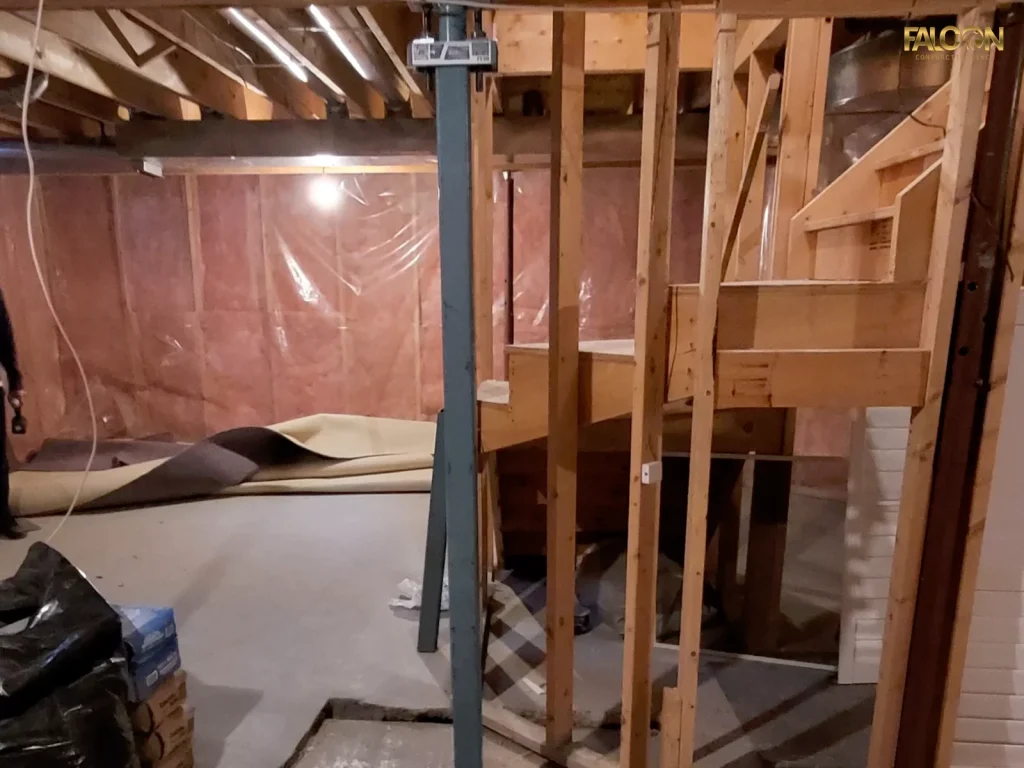
Before a single wooden stud is cut, the ceiling must be supported. Contractors build temporary shoring walls on one or both sides of the target wall. These temporary heavy-duty structures hold the massive weight of the house during the entire demolition and beam installation phase.
Step 5: Demolition and Utility Rerouting
Interior walls often hide vital plumbing pipes, electrical wiring, and HVAC ducts. Licensed plumbers and electricians must safely disconnect and reroute these utilities into adjacent walls or floor joists. Once cleared, the drywall and wooden framing are carefully dismantled and removed from the site.
Step 6: Beam Installation
With the wall gone, the new support beam is carefully lifted into place. This requires specialized lifting equipment and precise placement. The beam is secured to structural posts at either end. These posts transfer the overhead weight safely down through the floor and directly to the basement foundation.
Step 7: Final City Inspections
Before putting up new drywall to cover the structural work, a city inspector must visit your home to verify the construction. They check the beam size, the specific steel hardware used, and the structural posts to ensure everything perfectly matches the approved engineering drawings.
Choosing the Right Beam for Your Home
The type of beam installed dictates the final look of your ceiling and the total span of your new open space. Engineers calculate the required load capacity, but homeowners often have a choice regarding the visual finish.
1. Laminated Veneer Lumber (LVL) Beams
These are engineered wood beams created by bonding multiple layers of thin wood under high pressure. They are incredibly strong, predictable, and cost-effective. LVL beams are the standard choice for most residential wall removals in Calgary.
2. Steel I-Beams
For massive spans where an LVL beam would be too thick or heavy, structural steel is the answer. Steel I-beams can support immense weight over long distances. They are more expensive and harder to maneuver but allow for vast, uninterrupted open spaces in large homes.
3. Flush Mount vs. Drop Beams
- Drop Beam: The beam sits below the existing ceiling joists, creating a visible bulkhead between the two rooms. It is less expensive and faster to install because the existing ceiling structure remains mostly intact.
- Flush Beam: The beam is pushed up into the ceiling cavity so it sits completely flush with the joists. This creates a perfectly flat, seamless ceiling across the new open space. It requires significantly more labor, as the existing floor joists above must be cut and hung from the side of the new beam using heavy steel hangers.
Understanding the Associated Costs with Load-Bearing Wall Removal in Calgary
Budgeting for load-bearing wall removal in Calgary requires looking beyond just the demolition labor. Several factors influence the final price of your structural renovation.
Engineering and Permit Fees
Consulting a structural engineer and obtaining city permits are mandatory initial costs. These fees generally run in the thousands but ensure your home remains entirely safe, legally compliant, and fully insured.
Utility Relocation Costs
Moving a simple electrical outlet is inexpensive. However, rerouting main plumbing stacks, moving gas lines, or relocating large cold-air returns requires specialized trades and will noticeably increase the project budget.
Drywall, Flooring, and Finishing
Removing a wall leaves an empty gap in the floor and a raw opening in the ceiling. You must budget for drywall patching, matching the ceiling texture (or scraping old popcorn ceilings), and either repairing or fully replacing the main floor flooring to create a unified look.
What to Expect During the Construction Phase
Living in your home during a structural renovation is possible, but it requires preparation. Wall removal creates significant dust, noise, and disruption.
Professional contractors use heavy plastic sheeting and zipper doors to isolate the construction zone from the rest of your house. They operate negative air machines equipped with HEPA filters to capture airborne drywall dust and sawdust before it spreads to your bedrooms or furniture. Expect the heavy construction phase to take about one to two weeks, followed by several days of drywall taping and painting.
Trusting Falcon Contracting Inc. with Your Structural Needs
Structural renovations demand absolute precision, years of experience, and strict adherence to local building codes. Mistakes in this field compromise the integrity and safety of your entire property.
At Falcon Contracting Inc., we specialize in safe, efficient, and fully permitted load-bearing wall removal in Calgary. We handle the entire complex process on your behalf. From coordinating the initial engineering consultations and managing the City of Calgary permit applications to the heavy lifting, utility rerouting, and flawless final finishing, we protect your largest investment.
Our experienced crew ensures your home remains structurally sound while delivering the beautiful, modern open-concept design you desire. Contact Falcon Contracting Inc. today to schedule a detailed on-site assessment and take the first critical step toward a wider, brighter living space.
Frequently Asked Questions
No. DIY structural removal risks severe property damage, roof collapse, and immediately invalidates your home insurance policy.
Yes. The City of Calgary strictly requires a specific building permit and stamped engineering blueprints for any structural changes.
The physical demolition and beam installation generally take three to five days, followed by drywall and finishing work.
Not necessarily. If your budget allows, we can install a flush beam hidden inside the ceiling cavity for a perfectly flat finish.
It leaves a gap where the wall’s bottom plate sat. We can often patch this area, but many homeowners opt to install new continuous flooring.
If the required testing confirms asbestos, certified abatement professionals must safely remove it before we begin the structural demolition.
Usually, no. We seal off the work area and use HEPA air scrubbers to control dust, allowing you to stay in the home safely.